So I Will Never Write Code Again
I've been coding for 25 years. Since January, I haven't written a single line. And it feels like relief.
A year ago, I thought AI-assisted coding was going to be a nice productivity boost. Generate a Python script with ChatGPT, copy-paste it somewhere, save twenty minutes. I figured that was the next five years: small wins, gradual improvement.
Then last August, I wrote a feature where Copilot did about 80% of the work. I thought: okay, it’s getting closer.
Since January, I haven’t written a single line of code.
I want to be precise: I’ve produced a lot of code. More than ever, probably. But I didn’t write any of it. I steer. I review. I architect. I don’t type.
And I don’t feel the urge to go back.
This might sound like grief. I’ve been coding for 25 years. I wrote C for a window manager, Lisp for Emacs, Python for everything else. For most of my career, coding was a thing that defined me. Losing that should feel like losing a part of myself.
But it doesn’t. It feels like relief.
For years, I was frustrated. I had more ideas than I could build. The bottleneck was never thinking, it was typing. Translating architecture into syntax, aligning parentheses, naming variables, fighting linters. The fun was in the solving, not the writing. And now the writing part is handled.
I still enjoy reading code. It’s like reading a good book. Understanding how pytest works internally, tracing through a complex system, that remains satisfying. But when the goal is to produce, AI beats everything.
This is actually the second time I’ve stepped away from code. The first was when I became CEO. That time, it was forced. I didn’t choose to stop. I just ran out of hours. There was always one more meeting, one more hire, one more decision that pushed coding to the evening, then to the weekend, then to never.
That was grief. A slow, reluctant surrender.
This time is different. I’m not being pushed away. I’m choosing to work at a higher layer. The same way I once chose Python over C, because life is short and the abstraction was worth it. AI is just the next rung.
The creativity doesn’t stop. If anything, it accelerates. You still design systems, still make architectural choices, still think about data models and trade-offs. You just don’t spend hours translating those decisions into semicolons. The craft moves up a level, and that’s fine.
I know this will be harder for others. My colleague Rémy wrote about whether AI is killing craftsmanship. For engineers who defined themselves by the elegance of their code, by the perfectly named function, by the satisfaction of a clean diff, this shift feels like losing something sacred.
I get it. Writing C was a beautiful puzzle. Lisp was genuinely fun. And I still think learning to code by hand matters, the same way learning assembly helps you understand memory even if you never write it professionally.
But I’m not going to fight a paradigm shift out of nostalgia. The ride was great. The next one looks better.
I think the flow state people mourn isn’t gone. It’s just moving. Steering AI toward clean architecture, making the right system-level decisions, reviewing output with deep context, that has its own rhythm. The interruptions are still too frequent today (too many permission prompts), but the direction is clear. The flow will come back. It’ll just be at a different altitude.
If you’re a senior engineer feeling this shift approaching, here’s what I’d say: the grief you’re expecting might not be grief at all. The bottleneck was never the thinking. It was the typing. And the thinking is still yours.
Related posts
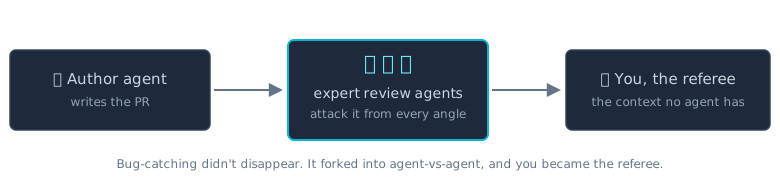
Agents Write My Code. Agents Review It. I Referee.
AI agents review my pull requests now, not me. But there is one thing I will never be able to hand them: everything my company knows that was never written down.
Read more →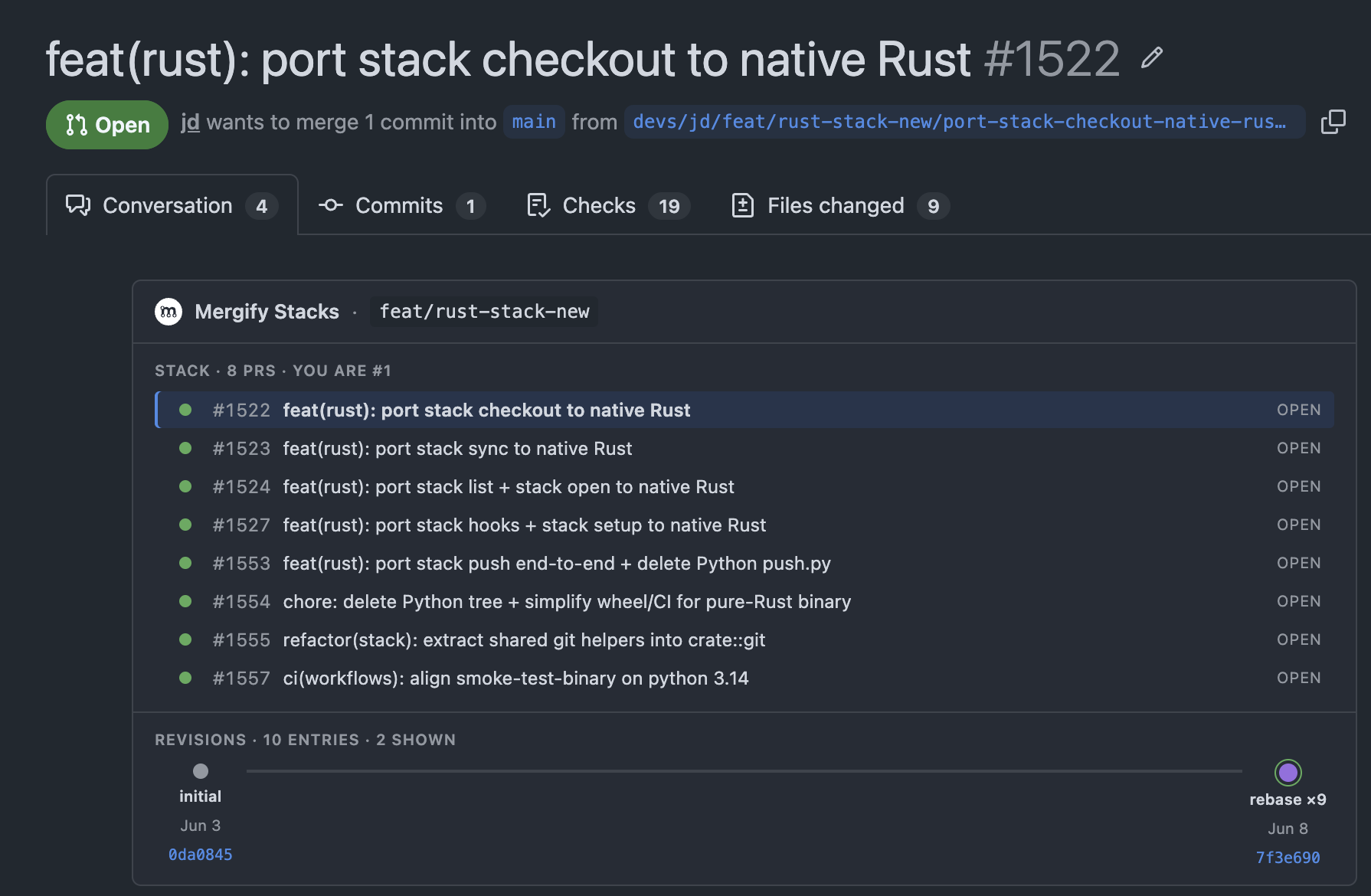
I Shipped a Rust Binary. I Can't Write Rust.
A rewrite used to be career suicide. Porting our CLI to Rust took a month of review and a model that knew the language better than I ever will.
Read more →