The SaaSpocalypse Won't Kill SaaS
Wall Street wiped $300 billion from SaaS stocks and declared the model dead. They're right about the wrong thing.

A reader emailed me last week. He’d listened to a podcast I did on saas.group about selling developer tools, and he had a question I’ve been hearing a lot: how do you pitch SaaS when the cost of building software is collapsing?
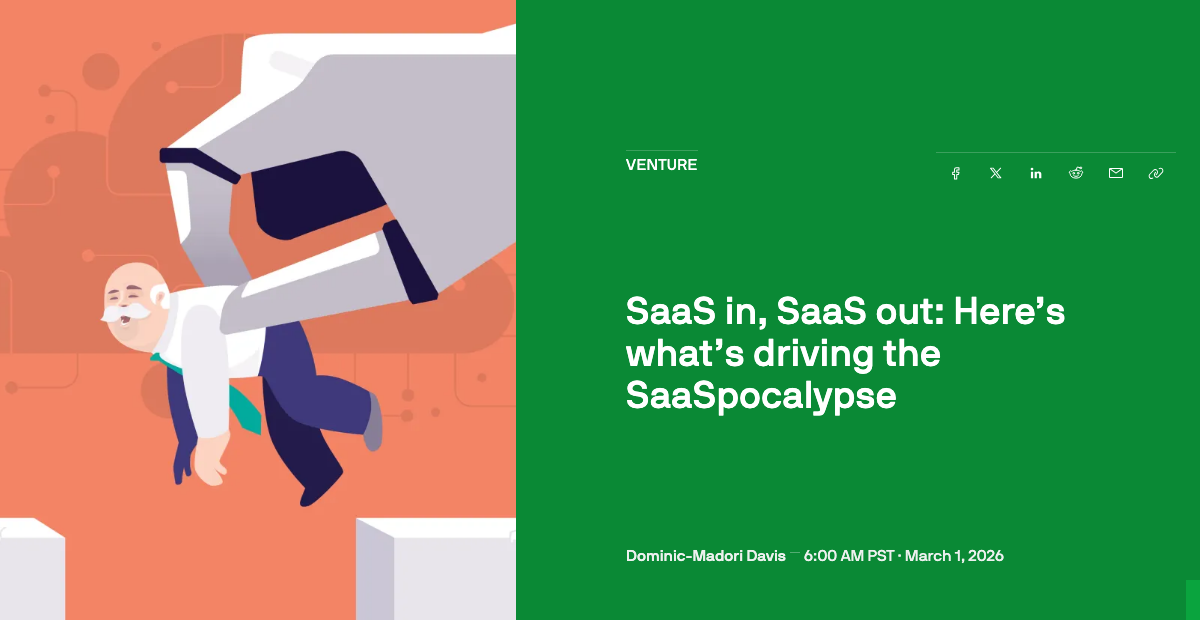
Fair question. In January 2026, Anthropic launched Claude Cowork, and Wall Street panicked. Roughly $300 billion in SaaS market cap disappeared in a single trading session. Wall Street analysts coined a term for it: the SaaSpocalypse. Per-seat pricing? Dead on arrival, apparently.
The “I can build that” crowd finally has data on their side. They’re right about one thing, and wrong about everything else.
“I Can Build That”
I’ve been hearing this for seven years. From the very first Mergify demo, developers would look at our merge queue and think: “This is just an automatic rebase, right?” Twenty minutes later, after walking them through race conditions, speculative merging, priority queues, and a dozen edge cases they hadn’t considered, the reaction would shift: “Oh. That sounds quite hard to do.” (I wrote about this back in 2024, and every word still applies.)
AI has made the objection louder. A developer with Claude or Cursor can now scaffold a basic merge queue in a weekend. I know this because I’ve done it myself: I shipped a production feature at Mergify using AI, coding less than an hour a day. But I could do that because I had seven years of context telling me what to build and how to evaluate the output. The AI wrote the code. The judgment about what code to write came from running the product.
A competitor starting from scratch with the same AI? They’d build the wrong thing. And that’s the part nobody talks about at the end of the vibe-coding weekend: you’re not done. You’re at the starting line. You’ve compressed the first sprint, not the product. It’s not done until you have real users running real workloads. Until you have a team that can maintain what you built. Until you can evolve it for years. The weekend prototype doesn’t know that GitHub’s API is asynchronous in ways they don’t document, that it breaks under load in ways you only discover at scale, or that the enterprise customer needs SAML before they’ll even look at your product.
Building Is the Easy Part
The SaaSpocalypse narrative assumes that the cost of software is mostly the cost of writing code. It’s not. Writing code was always the cheapest part.
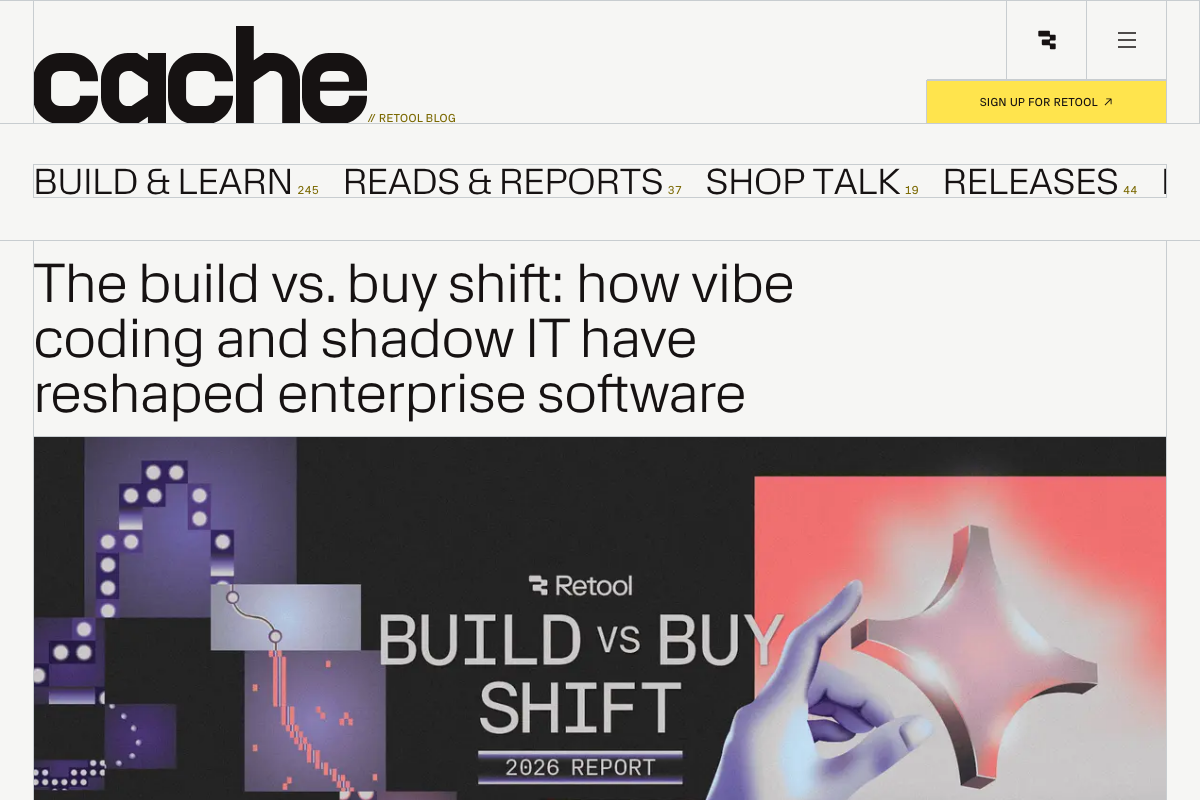
Retool’s 2026 Build vs. Buy report says 35% of enterprises have already replaced at least one SaaS tool with a custom build. That’s a real number. But the report also shows where the replacements are concentrated: workflow automations, internal admin tools, basic dashboards. The easy stuff. The tools that were always one ambitious intern away from being replaced. I don’t see enterprises vibe-coding their own Salesforce or Datadog.
The costs that AI didn’t make cheaper:
Users. Finding them, understanding what they actually need (not what they say they need), and iterating based on real usage patterns. We built speculative merging at Mergify because a customer running 100+ PRs a day showed us that sequential merging broke down at scale. That insight came from watching real teams hit real walls, not from a prompt. No model can replicate that feedback loop yet, because it requires deployed software, real usage data, and the kind of trust that makes customers tell you what’s actually broken.
Maintenance. Your weekend project works today. Will it still work when GitHub ships a breaking API change? When your company scales from 50 to 500 engineers? When the on-call engineer at 2am needs to debug a failure path you never tested? AI makes writing code faster, but it hasn’t made maintaining it any easier.
Trust. Enterprise buyers don’t want a git repo. They want SOC 2, uptime SLAs, a support contract, and someone to call when things break. Trust is earned across hundreds of deployments, not generated in a prompt.
The Real Moat Is Not Code
If building is cheap and maintenance is expensive, what’s the actual moat? Domain expertise. The thing that takes the longest to build up and is the hardest to transfer.
Product discovery is the boring work that separates a tool from a product. The thousands of conversations with users. The wrong turns that taught you what not to build. The instinct for when a feature request is actually a symptom of a different problem. Seven years of running Mergify gave us knowledge that doesn’t fit in a markdown file (or a Claude skill, at least not yet).
Reliability, trust, and ease have no price. They’re earned over years, not generated over a weekend.
AI agents are getting better at learning domains. METR benchmarks show that the scope of what AI can handle autonomously is doubling roughly every seven months. I’m not dismissing that. But domain expertise isn’t just knowledge you can look up. It’s judgment shaped by consequences. AI can read your docs. It can’t feel the pain of shipping a bad feature to 2,000 teams and spending the next month cleaning up the fallout. That scar tissue is what makes you build differently the next time. Maybe AI will get there. But right now, there’s no shortcut to the operational context you accumulate by running a product for years.
Natural Selection
None of this means every SaaS company is safe. Thin wrappers, glorified CRUD apps, tools that existed only because building was expensive: they should be worried. This is natural selection, and it won’t be fair. Some decent products with real value will die too, because their surface area is small enough for AI to replicate. A standalone CSV-to-dashboard tool? That’s a Claude prompt now, not a business.
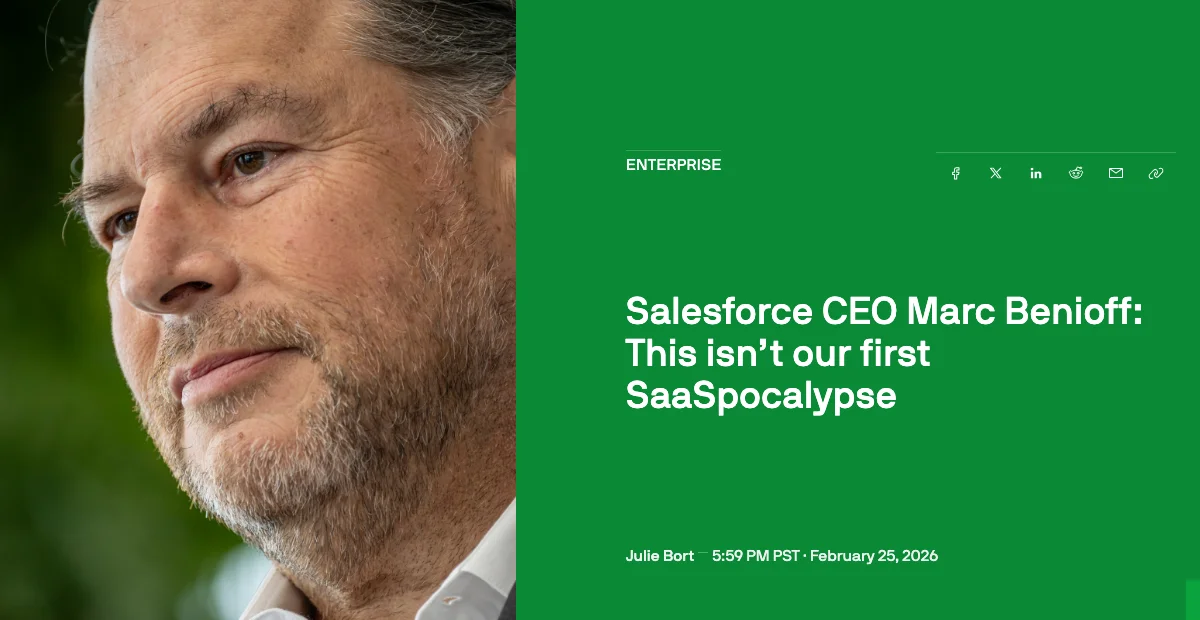
Benioff says “this isn’t our first SaaSpocalypse.” He’s right that SaaS survives, but he’s wrong to be dismissive about how many won’t.
The SaaSpocalypse narrative confuses the death of lazy SaaS with the death of SaaS. The model isn’t dying. The bar is rising. The products that survive will be the ones where the code was never the point. The point was always the knowledge embedded in it.
The Pitch Hasn’t Changed
Back to my reader’s question: how do you update the sales pitch?
You don’t. The pitch was never “we wrote the code so you don’t have to.” It was always “we know things you don’t, and we turned that into a product you can trust.” The framing shifted. Instead of “look at all the edge cases you’d have to handle,” it’s now “look at all the edge cases AI doesn’t know exist.”
The moat was never the code. It was always the knowledge.
Related posts

The AI Free Lunch Is (Almost) Over
Free dinners from Foodora ended. Free Claude Code dinners are next.
Read more →
Every Customer Gets the Same Software. That's Ending.
SaaS shipped one product to everyone because maintaining a version per customer was impossible. That was never a principle. It was a budget, and the budget just changed.
Read more →