Art Was Never About the Effort
The line between art and not-art has moved every time a tool made things easier, and it was always redrawn by people who had already crossed it.
AI didn’t lower the bar for art. It removed a toll, and the people angriest about it are the ones who already paid it.
That sentence annoys a lot of people. Illustrators, writers, musicians, a fair number of editors. I understand why. I still think they’re wrong.
Art made with AI is art.
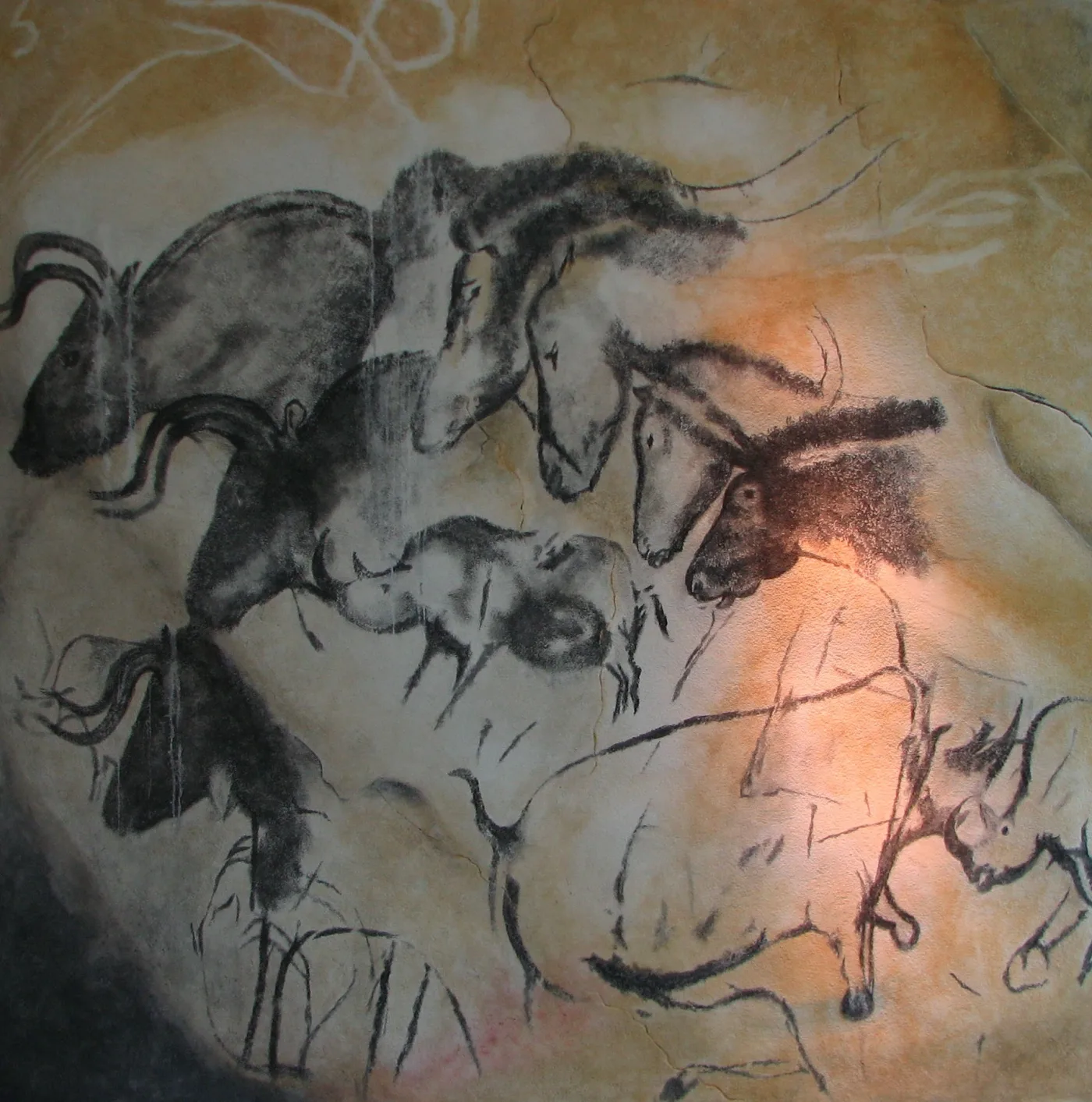 Chauvet, Ardèche. Roughly thirty thousand years old.
The line has always moved
Thirty thousand years ago, someone in the Chauvet cave ground charcoal and ochre into powder, mixed it with fat or spit, and worked it into the rock with their fingers. They made the pigment. They made the tool. They found the surface.
Jump to 1907. Picasso walks into a shop and buys tubes of paint a chemist mixed, brushes a workshop assembled, a canvas someone else stretched over a frame someone else built. He grinds nothing. Then he paints Les Demoiselles d’Avignon.
Still art, obviously.
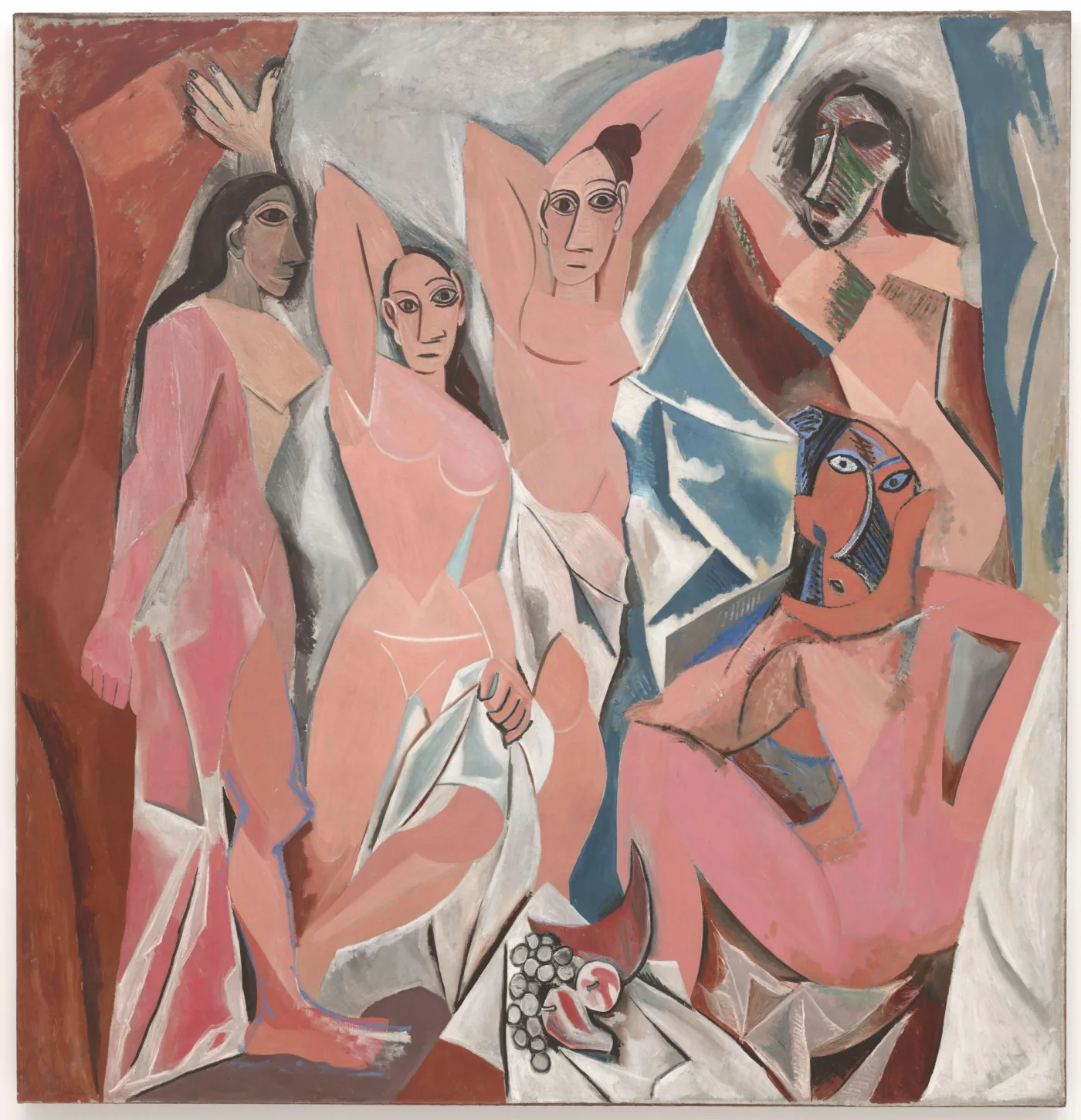 Picasso, 1907. Every material in this painting was bought in a shop.
So the line moved, and making your own materials quietly stopped being part of the job.
It kept moving. Sampling ran the same argument for fifteen years and came out split down the middle. Nobody now claims a sample-based record isn’t music, and the lawyers still won. Grand Upright opened with “Thou shalt not steal,” and De La Soul’s catalog stayed off streaming until 2023 because clearing it was impossible.
The art question and the money question went opposite ways. Both answers stuck.
Then there’s Duchamp, who did all of this a century ago while most of the people redoing it have no idea he exists. In 1917 he bought a urinal from a plumbing supplier, signed it R. Mutt, and submitted it to an exhibition whose whole premise was that it had no jury and would hang anything.
It never hung. The board put it behind a partition for the duration of the show, and Duchamp, who sat on that board, resigned. The defense published in The Blind Man is the entire argument, already finished:
Whether Mr Mutt with his own hands made the fountain or not has no importance. He CHOSE it. He took an ordinary article of life, placed it so that its useful significance disappeared under the new title and point of view, created a new thought for that object.
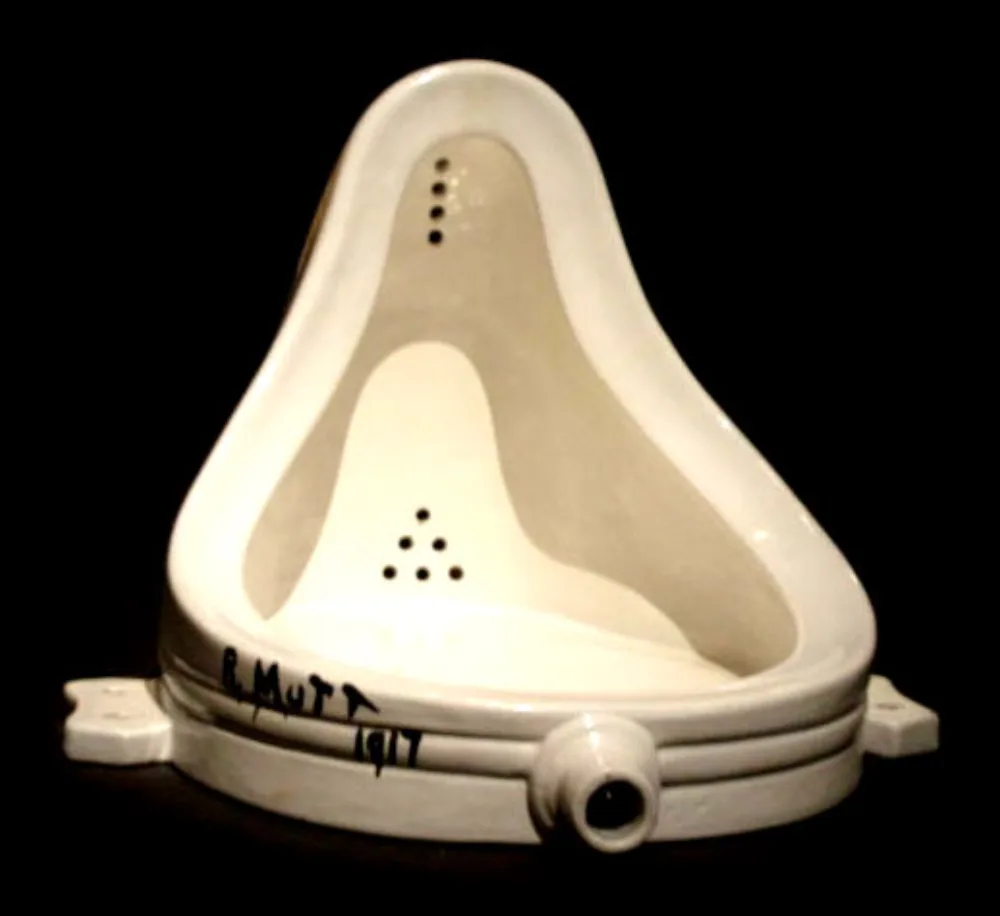 Fountain, 1917. The original was lost almost immediately; every one you’ve seen is a later replica.
Read that again with a prompt box in mind.
Making the object with your own hands has no importance. Choosing it, and placing it so that it means something different, is the work.
That buys less than it looks. If art-status lives in intention, somebody still has to have meant something, and a lot of generated output fails that test on its own terms.
But the requirement was about meaning. Nobody has ever specified how long the meaning should take.
What we’re actually defending
The rule has always been that art must cost you something.
We don’t put it that way because it sounds bad out loud. We say “you didn’t really make it.” But nobody tells a painter their work is worth less because the cadmium red came premixed. What we mean is that the painter still stood there for four hundred hours.
Call that what it is: a meritocracy of suffering. We want the price paid to be visible, because a visible price feels like proof that something was deserved.
Suffering isn’t a medium, though. You can’t hear it in the track.
Museums are full of technically flawless paintings nobody remembers, made by men who worked themselves half to death and were more decorated in their lifetimes than the painters we hang beside them now. Bouguereau, Cabanel, Meissonier. All those hours went in and left no trace on the canvas.
What effort actually filtered was people.
Everyone who had something to say and no ten years to spare learning how to say it.
Which brings up craft, because craft keeps getting mistaken for art. Craft is the luthier, the typesetter, the person who can render a hand from memory. It’s hard, it’s worth paying for, and it takes a decade.
Art is meaning, and meaning is the whole requirement. Craft is how you get it out of your head.
Yes, I’m drawing a line while arguing that lines are arbitrary.
Mine just doesn’t require anybody to suffer in order to cross it.
Split those two apart and the panic makes more sense and matters less. AI leaves craft intact and kills it as a standalone offer, which is a narrower problem and a more survivable one.
An illustrator with a point of view is fine. An illustrator whose whole pitch was “I can spend forty hours doing what you can’t” has a problem, and it’s the one juniors were supposed to have with code and seniors actually got.
There’s a catch, and I’d rather say it than let someone else say it for me. You need enough craft to have taste.
The ten years was a toll, but it was also how people learned good from bad. Removing the toll is good. Nobody has explained where the taste comes from instead.
We have run this experiment before
When photography arrived, painters said exactly what illustrators say now. The machine does the work, the operator just points it. Baudelaire wanted photography put back where he thought it belonged, “the very humble servant of the sciences and the arts.” He was sitting for Nadar at the time.
In 1884 the US Supreme Court had to decide whether a photograph could be copyrighted at all. A lithography company had run off 85,000 unauthorized copies of Napoleon Sarony’s portrait of Oscar Wilde, arguing that a photograph has no author because a machine made it.
The Court disagreed, and the reasoning is what matters. Sarony was the author because of what he chose: posing Wilde, the costume, the draperies, arranging the light. The choices were the work, and pressing the button never was.
That is almost word for word the argument for prompting.
Then read the rest of the ruling. The Court went out of its way to decide nothing about ordinary photographs, the merely mechanical kind with “no originality of thought” in them. Those, it hinted, might have no author at all. It protected Sarony and refused to protect photography.
Fast forward to February 2023 and the US Copyright Office ruling on Zarya of the Dawn, a comic whose images came out of Midjourney. Copyright denied for the images, granted on the text and on the selection and arrangement of them. The author’s choices were protected and the generated pixels weren’t.
The same test, 139 years apart, landing on different facts. Everyone has already conceded the whether. They’re haggling over how much.
The objection that lands
There’s one version of this I can’t wave away, and it isn’t about art at all.
A model ingested a few billion images without asking anyone. I genuinely don’t know whether that’s a difference of degree or a difference in kind.
One painter absorbing two hundred influences over a lifetime and a system absorbing five billion in a training run might be the same story with a bigger number. They might be two things that happen to rhyme.
What I’m sure of is that it’s a separate question. “Were you paid when your work was used?” and “Is the output art?” are different arguments, and neither settles the other.
If you stole from a painter you’re a thief, and the thing you made is still art. Both can be true at once. Sampling already showed us the shape of it: the music was never in doubt, the invoice was.
If the fight is about consent and compensation, let’s have that fight properly, because it’s real. An illustrator losing commissions is losing rent, and that deserves a serious answer rather than a lecture about how the line always moved.
I don’t have that answer. What I know is that photography became art and also ended portrait miniature painting as a profession inside a single generation. Winning the first argument did nothing for the people on the wrong end of the second.
The barrier is down now, so more people will make things, and most of what they make will be bad.
That was already true. Most paintings, most novels, most records. What changes is when the filter runs: at the door using effort, or late using taste.
I’ve written the pessimistic version of this myself. A late filter only works if somebody applies it, and at platform scale most listeners don’t. An AI band pulls a million plays because the audience isn’t checking.
So the filter moved, and it fires less often than the old one did.
What I keep coming back to is who each failure excludes. The old one turned people away at the door for not having ten years. The new one lets everyone in and buries most of them. I’ll take the second failure, and I won’t pretend it isn’t one.
I can’t draw and I can’t read a score. There are prints hanging in my home that a model made from my prompts, and tracks I finished in Ableton that I couldn’t play a bar of.
Nobody draws the line at using AI to learn something. They draw it exactly where I’m standing: the model did the work, and my part was choosing. A purist would call that a loss.
I think it’s the entire point.
Duchamp didn’t make the urinal either.
Related posts
Every Customer Gets the Same Software. That's Ending.
SaaS shipped one product to everyone because maintaining a version per customer was impossible. That was never a principle. It was a budget, and the budget just changed.
Read more →
Your LLM Is Not a Colleague
The industry spent two years teaching you to call your agent a teammate. Now watch what happens the first time something breaks.
Read more →